Ukrainian cancer specialists spent two weeks at Karolinska to learn, and to share
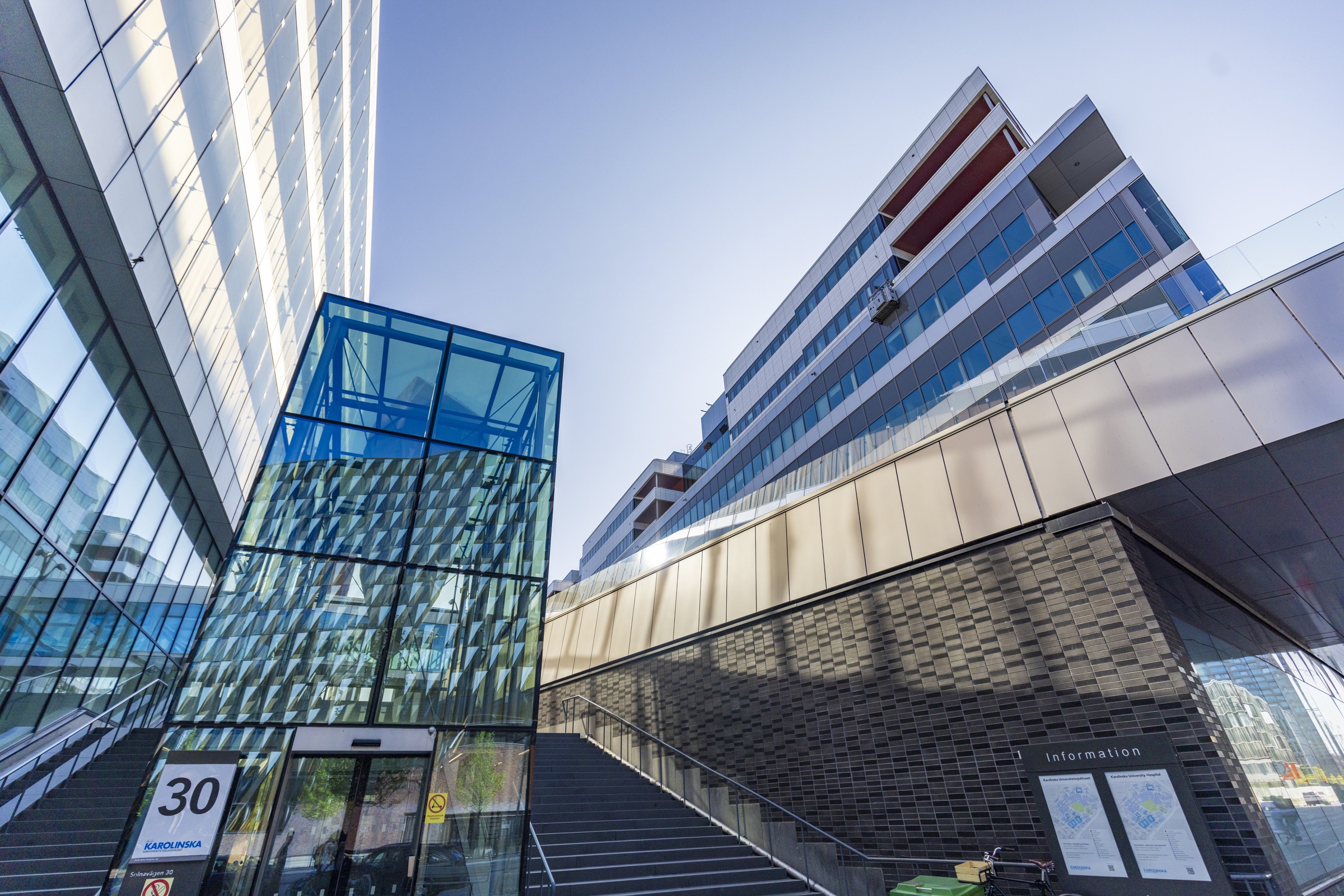
The visits took place in early October, in different parts of the hospital. They had a lot in common. In both cases, NCI colleagues came to see how established programs work in daily practice and to learn from Karolinska’s experience as they build up similar services in Kyiv.
Building a liver transplantation center in Kyiv
The transplantation delegation consisted of two surgeons, two senior anesthesiologists and an operating room nurse. NCI is working to set up a liver transplantation center in Kyiv, and the visit focused on how such a program is organized and managed at hospital level.
The group followed the work from several angles. They attended lectures, visited operating rooms and took part as observers in multidisciplinary meetings, including pathology discussions and transplant listing meetings. They also joined ward rounds and outpatient clinics.
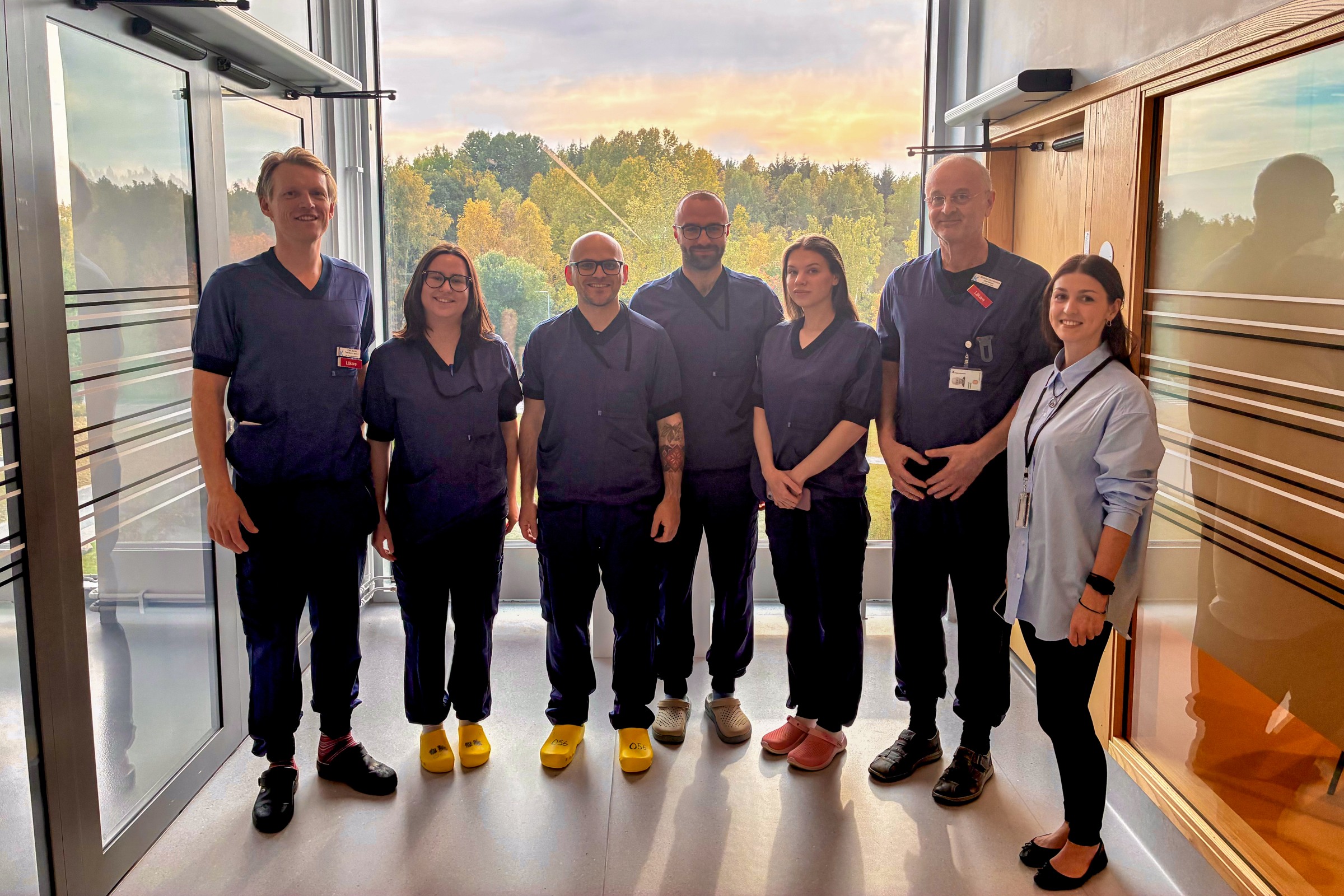
Viacheslav Kopetskyi, surgical oncologist and Deputy Medical Director at NCI, describes the visit with a good balance. “The observership was very well organized and offered a great balance between educational sessions and practical exposure to everyday clinical activities,” he says.
For the team, the organization behind the surgery was what mattered most.
“What we particularly appreciated was the opportunity to see not only the clinical aspects of liver transplantation, but also how the entire program is organized,” says Kopetskyi.
“Understanding the interaction between different specialties, the decision-making processes, and the teamwork behind a successful transplant program was especially valuable for us.”
He also says the conversations with Karolinska colleagues were useful.
“The discussions were practical, honest, and highly relevant to the challenges we face while developing our own liver transplantation program in Ukraine.”
A new path for nursing
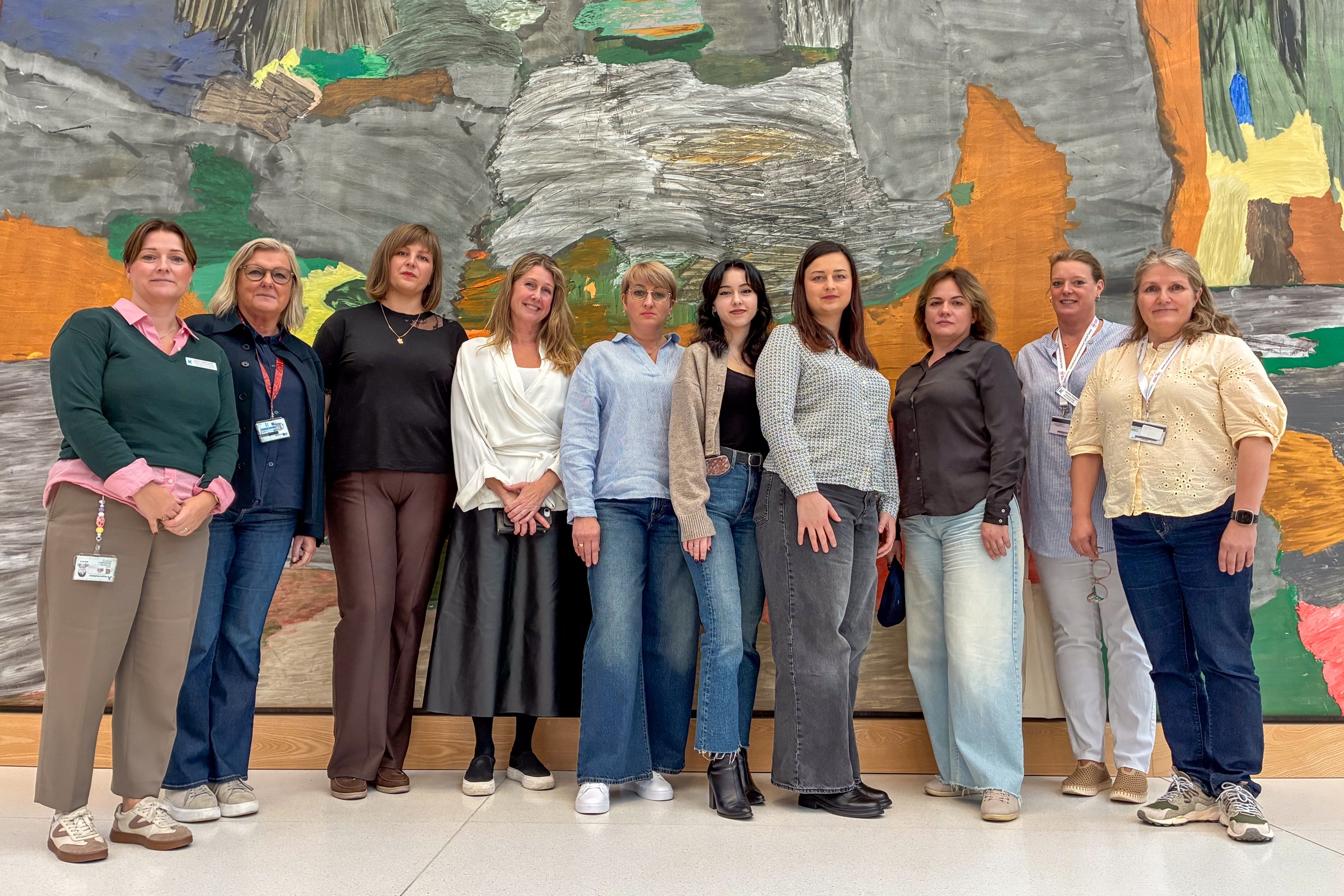
The nursing delegation included NCI’s Chief Nurse and the head nurses of the bone marrow transplantation department, the breast center and plastic surgery, and the anesthesiology and intensive care unit. NCI is establishing a new nursing path, and the visit gave them a close look at the Swedish model for nursing education and practice.
During their stay, the group attended lectures and observed nursing work in many parts of Karolinska. These included acute assessment care for cancer, the medical treatment ward, cell therapy and allogeneic stem cell transplantation, hematology, upper GI surgery, urology and intensive care. They also visited units for breast cancer and for head, lung, neck and skin cancer, covering both inpatient and outpatient care.
Mentorship that goes both ways
For Karolinska, the visits are a chance to share experience and act as mentors for colleagues who are building new services. Welcoming observers also encourages us to reflect on how our own structures work.
Nursing is a profession without borders, and the same is true for transplant medicine. The contacts made during these weeks are among the most lasting results.
That is also what Kopetskyi highlights.
“We were impressed by the openness of our Swedish colleagues, their willingness to share their experience, and the friendly atmosphere throughout our visit,” he says. His team went home with “many useful ideas, a better understanding of how a mature transplant program operates, and, most importantly, new professional connections.”
Looking ahead, he is clear about what he hopes for. “We hope this visit will become the starting point for a long-term collaboration between our institutions.”