History
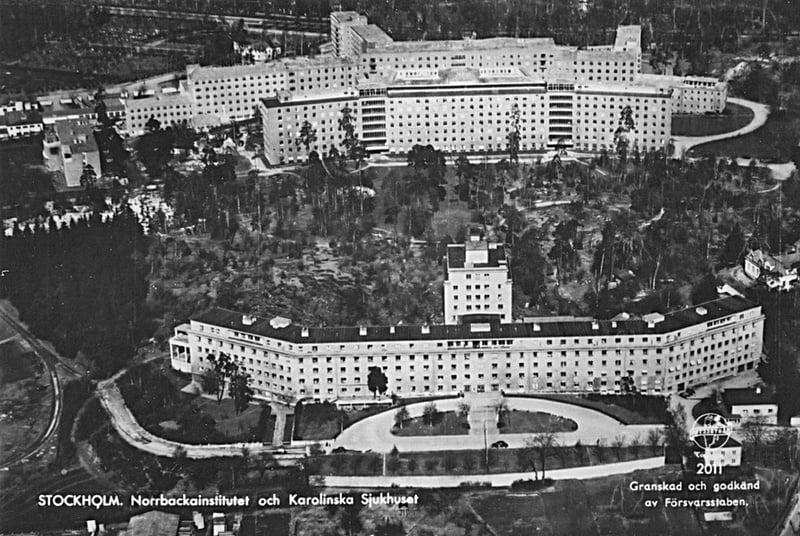
The history of Karolinska University Hospital is closely linked to that of Karolinska Institutet, the medical university founded in 1810. Karolinska Hospital in Solna opened in 1940, strengthening the integration of medical research, education and patient care.
From the day it opened, it was regarded as a modern and advanced healthcare institution. In the following decades, additional facilities for psychiatry and dermatology were added, and the opening of Astrid Lindgren Children’s Hospital in 1980 marked another important milestone in the hospital’s growth.
Huddinge Hospital welcomed its first patients in 1972 and soon developed into an important center for healthcare, education and research. In 2004, Karolinska Hospital and Huddinge University Hospital merged to form what is now Karolinska University Hospital.
In 2010, construction began on a new facility, New Karolinska Solna. In the years since, this state-of-the-art hospital has gradually replaced the older hospital buildings in Solna.
Karolinska University Hospital and Karolinska Institutet are separate organizations that have worked together since Karolinska Hospital was established. The hospital is owned and operated by Region Stockholm, while Karolinska Institutet is a state-funded university.
Although their responsibilities and governance structures differ, they continue to collaborate on clinical research, innovation and the education of healthcare professionals. Over the years, this partnership has contributed to numerous pioneering medical discoveries and advances in healthcare.
Today, Karolinska University Hospital is one of Europe’s largest university hospitals, with major sites in Solna and Huddinge. Together with Karolinska Institutet, it forms an internationally renowned medical and academic environment where research, education and highly specialized healthcare are closely integrated.
Hear our researchers talk about their work in the new series "Innovation for life".