XR technology brings healthcare professionals from three countries together in joint workshop
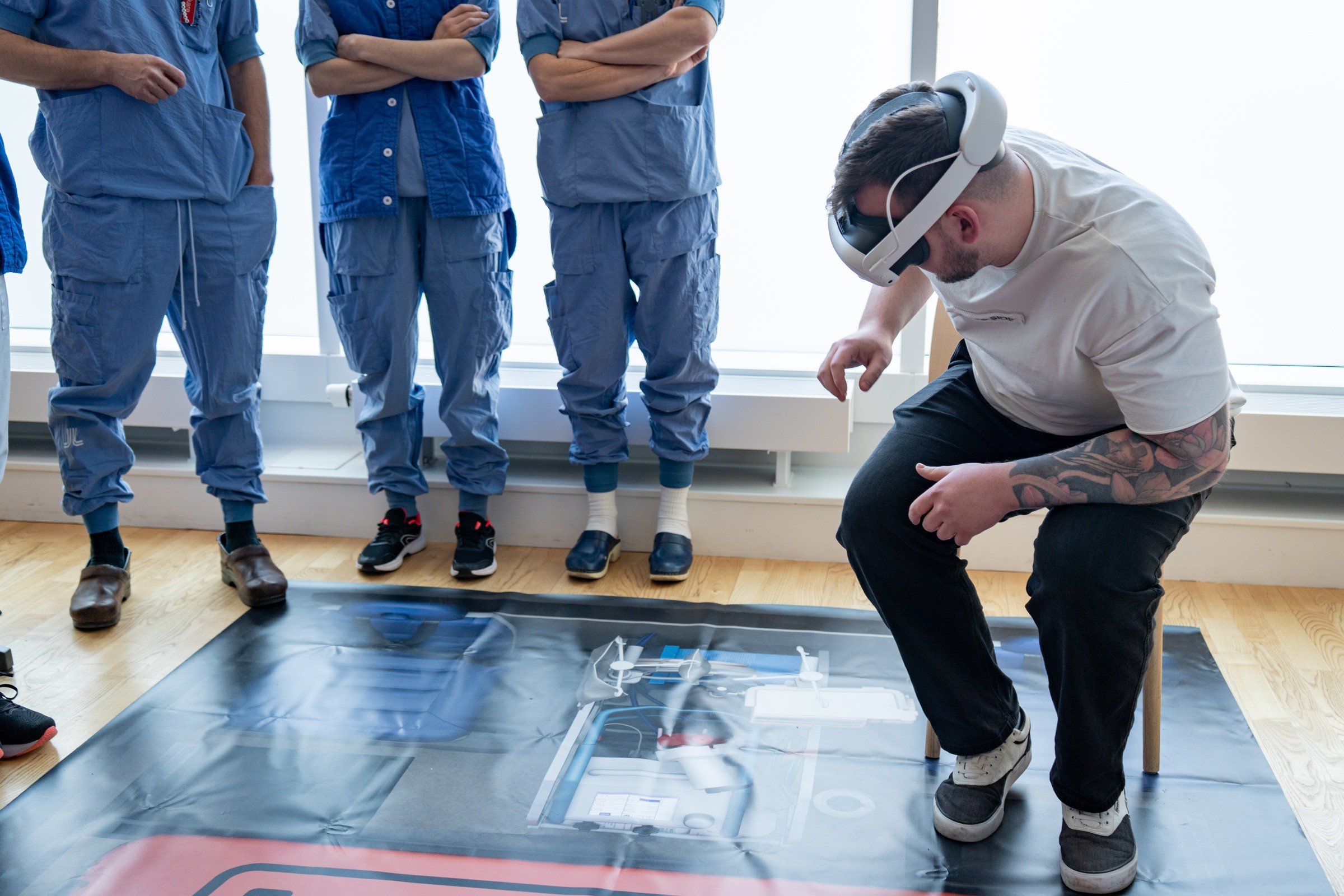
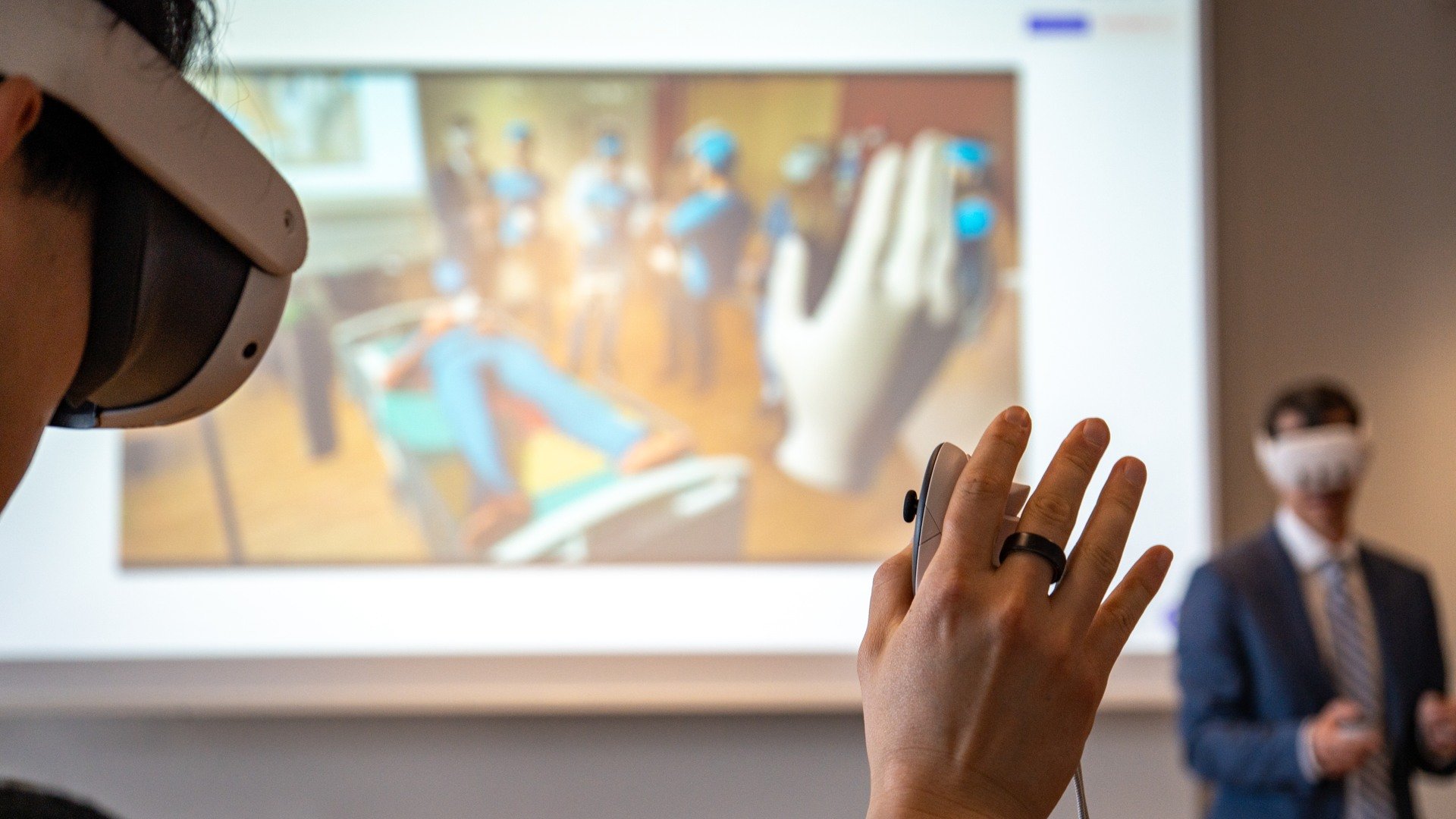
The workshop is part of a three-year project funded by Vinnova, in which Karolinska University Hospital and Karolinska Institutet are collaborating with Stanford University and three technology companies. Since its launch in autumn 2025, the project has developed solutions using extended reality (XR) technology to advance clinical care, education, and long-distance collaboration. During the workshop, two prototypes currently in development were presented and demonstrated.
Training ECMO in a virtual helicopter
Carolina Wrobel, representing one of the project's partner companies, presented a virtual training environment designed to allow healthcare staff to practice performing ECMO (extracorporeal membrane oxygenation) treatment inside a helicopter. Training in a real-world setting is both logistically demanding and resource-intensive — helicopters are frequently in active service, and realistic physical exercises are difficult to replicate. In the virtual environment, scenarios can be repeated, customised, and carried out without placing any burden on clinical operations.
Augmented reality simulation across borders
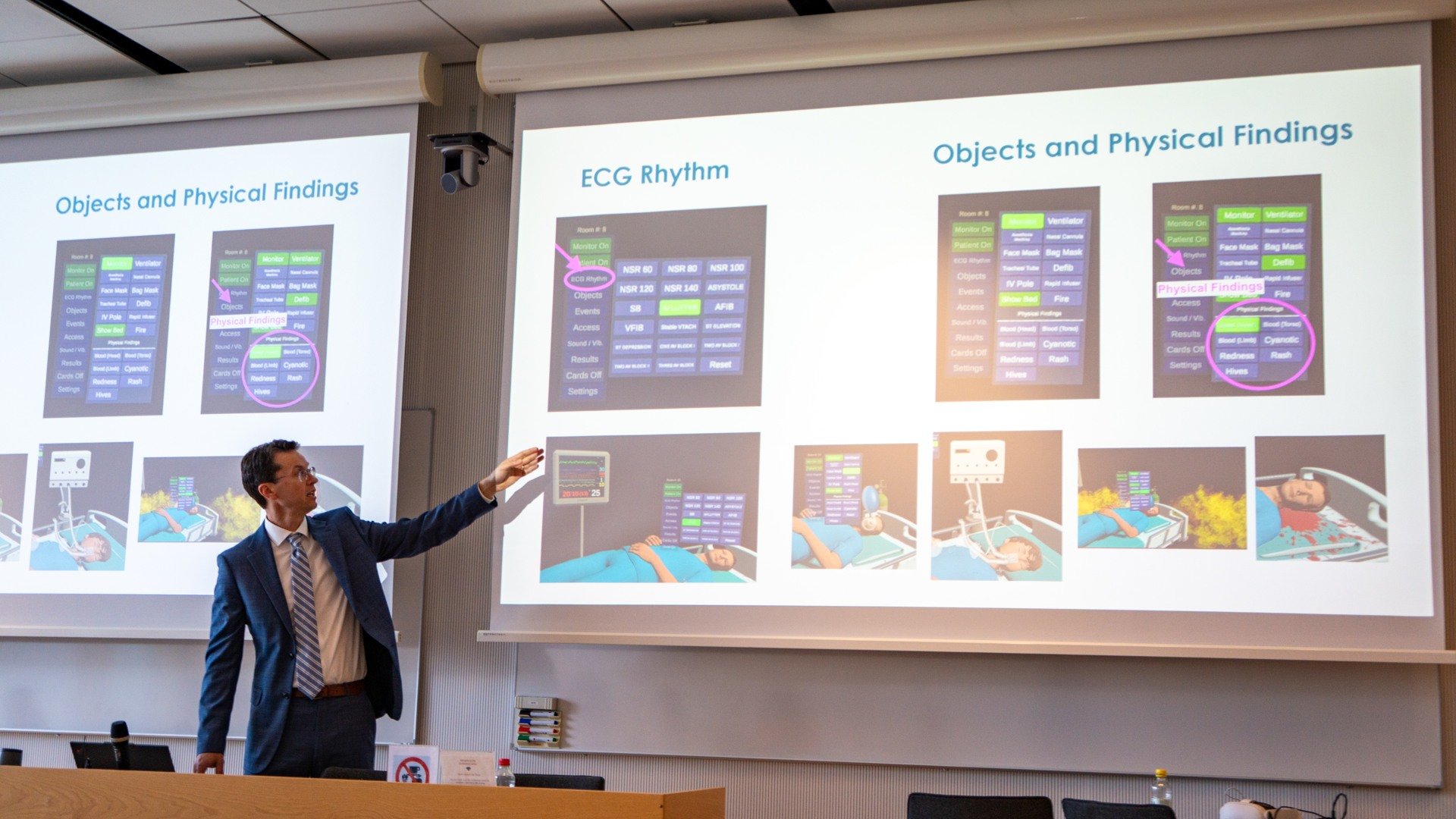
Next, Tom Caruso from Stanford University demonstrated a medical simulation platform developed within the Stanford Chariot Program. The software CHARM (Chariot Augmented Reality Medical simulation software), uses augmented reality to allow multiple participants to train together in the same scenario, regardless of their physical location. An instructor controls the sequence of events and can introduce variables such as haemorrhaging, fire, and acute complications. Real-world objects can be integrated into the simulation, creating a highly realistic training experience.
The project also encompasses development of a remote care platform where patients and clinicians interact as avatars, as well as advanced 3D models derived from X-ray imaging for use in pre-operative preparation.
Also present at the workshop were healthcare professionals from Okhmatdyt in Kyiv, Ukraine's largest children's hospital, who are currently taking part in educational exchanges at Karolinska, including training in paediatric trauma care and hospital management.
During the workshop, it was announced that Okhmatdyt will gain access to the XR technology and will be able to conduct joint simulation exercises together with Karolinska and Stanford University. This means that healthcare staff in Sweden, Ukraine, and the United States will now be able to train side by side, despite being in different countries.
This new step builds on the ongoing knowledge exchange between the hospitals, through which Ukrainian staff participate in longer fellowship programmes and shorter specialist training courses at Karolinska, including in ECMO.
Text: Olle Borg