Karolinska University Hospital hosts first international paediatric trauma course

On 23–24 April 2026, the Trauma Centre at Karolinska University Hospital in Solna, Stockholm, marked a significant milestone, hosting the very first International Paediatric Trauma Course.
The course was initiated and directed by Robin Österberg, Head of the Trauma and Acute Care Surgery Unit at Karolinska University Hospital, who assembled a distinguished Swedish and international faculty for the occasion. The initiative reflects Karolinska's longstanding commitment to advancing trauma care through education, research, and global collaboration.
Why paediatric trauma demands dedicated expertise
Although severely injured children represent a relatively small proportion of trauma cases, the stakes are extraordinarily high. Paediatric trauma requires early recognition of deterioration, age-specific resuscitation protocols, precise team communication, and well-integrated trauma systems. Errors or delays in any of these areas can have irreversible consequences. Dedicated, multidisciplinary training is essential, and until now, a focused international forum for this field has been largely absent.
A truly international faculty and programme
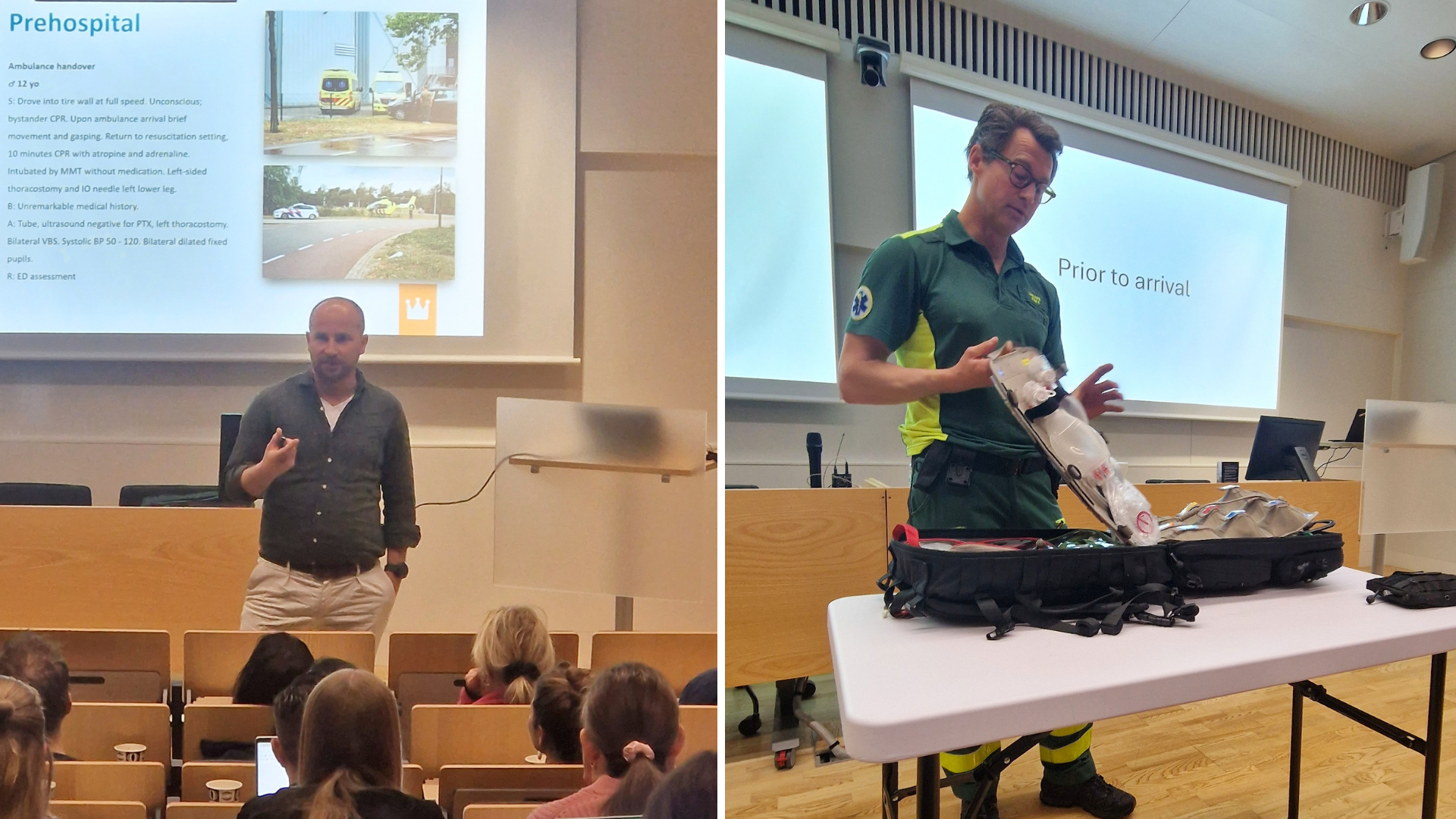
The course brought together expert speakers from Sweden, the Netherlands, the United States, and South Africa, representing disciplines spanning paediatric surgery, trauma surgery, anaesthesia, intensive care, radiology, prehospital care, burns care, child protection, orthopaedics, and psychotraumatology.
Participants travelled from across the world, creating a rich exchange of clinical experience, perspectives, and practice models that rarely converge in a single room.
Over two intensive days, the programme addressed the full clinical spectrum of paediatric trauma — from paediatric physiology and prehospital management, through primary and secondary survey, abdominal, thoracic and neurotrauma, to damage control surgery, burns, pain management, difficult airway management, intensive care, and the psychological consequences of traumatic injury. Child protection was also addressed as an integral part of the curriculum.
Building a foundation for the future
The ambition does not end with this first edition. The course is designed to grow into a recurring international educational programme, with a particular focus on strengthening European collaboration in paediatric traumatology. For a field where standardised, evidence-based care across borders can save lives, that ambition carries real weight.
Karolinska University Hospital is one of Europe's leading university hospitals, with a Level 1 Trauma Centre treating the most complex and severely injured patients in the Stockholm region and beyond. Initiatives like this course reinforce the hospital's role not only as a centre of clinical excellence, but as a driver of knowledge-sharing across the global medical community.