Hearing and Dizziness Disorders
Symptoms of hearing disorders can occur suddenly or may develop gradually over time, affect one or both sides, or be complete, incomplete, or fluctuating. It can appear as a loss of sound localization, distortion of sound, hyperacusis, or tiredness due to constantly concentrating when trying to hear the surroundings. Tinnitus, with or without hearing loss, is also a symptom of hearing disorders. In children, delayed speech development or behavioral and concentration difficulties can turn out to be caused by hearing disorders.
With balance disorders, we mean vertigo, dizziness, and postural instability. These symptoms may present as acute, persistent vertigo, short attacks (hours), or paroxysms (seconds/minutes) but also as chronic conditions. Balance disorders are often associated with moderate to high grades of invalidity and inability. Nausea or vomiting, but often neurological or hearing manifestations, may complicate the clinical presentation. The diagnosis of balance disorders is challenging, involving different organs/functions with balance manifestations that appear similar, and lacking in specificity. In children, balance disorders may alter normal motor development with motor delays and suboptimal motor proficiency in school children.
To diagnose an adult or child, we start with an examination of the ear using advanced audiological testing. This may only include audiometry and an assessment of speech understanding but can also include an assessment of the eardrum and bones of hearing, inner ear and hearing nerve function, or the assessment of the central pathways of hearing. We have developed specialized testing regimens to assess all patients from their day of birth while awake or sleeping. We have also developed and validated a child-friendly balance assessment, which helps us to screen the balance pathways in infants and newborns, to test the balance organ function in preschool- and school children when presenting motor delays, hearing loss, and during assessment for cochlea implantation.
At Karolinska Ear and Hearing Center, we offer evidence-based treatment and rehabilitation of your hearing disorder. Treatment or rehabilitation of hearing disorders can be hearing aids with or without extra resources at work or in school. Surgical treatment for hearing loss includes bone conductive devices, active middle ear implants, cochlear implants, and laser surgery to treat otosclerosis. We are able to monitor hearing during surgery to reduce the risk of surgical damage.
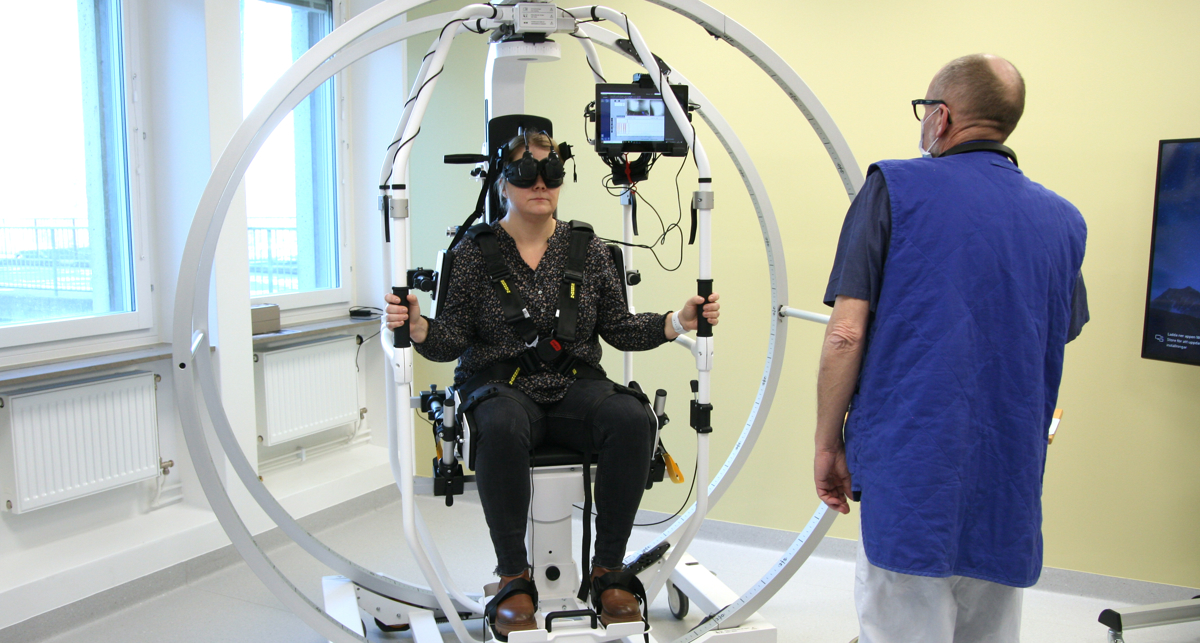
We can perform outpatient medical intratympanic treatments, such as Gentamicin and Corticosteroid Injections, to treat severe Ménières Disease or intractable vestibular vertigo. Recently we have introduced the biaxial repositioning rotational chair (Rotundum®) for the treatment of the more challenging positional vertigos (BPPV), and we have a strong tradition of balance rehabilitation by a team of dedicated physiotherapists. Besides the training programs for vestibular loss, bilateral vestibulopathy, and fall prevention, we have confidence in optokinetic protocols and persistent postural perceptual vertigo desensitization protocols.