European partners join forces to drive reimbursement reform for digital and home-based care
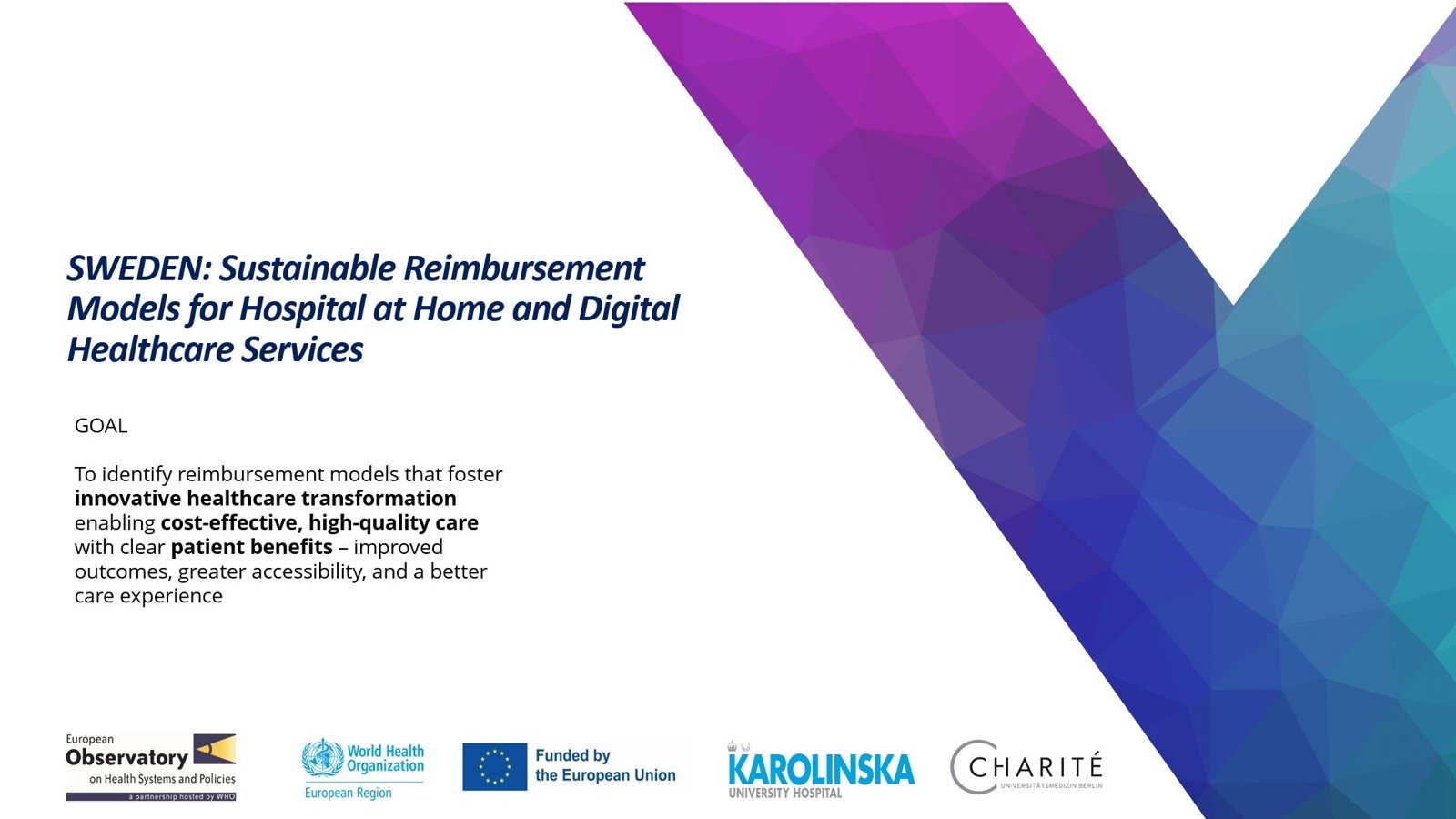
The project, funded by the European Union through the Technical Support Instrument (TSI), is led by Karolinska in collaboration with WHO/Europe and the European Observatory. As healthcare delivery shifts towards hospital@home, remote monitoring and earlier discharge, current reimbursement models still prioritise physical visits and inpatient episodes. This discrepancy makes it difficult to scale innovations that strengthen patient-centred care and relieve pressure on the healthcare system.
During the meeting, Karolinska presented the project’s early findings, including how today’s reimbursement logic limits digital health services and advanced care at home. Sweden’s work is focused primarily on tertiary-level care — ensuring that highly specialised home-based services can be safely and sustainably integrated into the wider system.
WHO/Europe provided an update on the project’s progress and highlighted a key challenge: “The DRG system was designed for inpatient episodes – not hybrid care, digital monitoring or remote coordination.”
The European Observatory shared international insights from its evidence review, including case studies from Australia, Canada, England, France, Scotland and Spain. Findings confirm that while hospital@home is expanding globally, cost-effectiveness data remain limited, underlining the need for coordinated European collaboration.
EUHA members reiterated their commitment to supporting this effort. Several participants underlined the importance of aligning future reimbursement with the evolving role of modern university hospitals — institutions that not only deliver highly specialised clinical care but also drive digital innovation, support complex care coordination and increasingly contribute to prevention and population health.
As the project continues, Karolinska will work closely with EUHA, WHO/Europe, the Observatory and partners across the healthcare system. The collective aim is clear: to develop reimbursement models that make digital and preventive care a natural and sustainable part of future healthcare — and to invite more stakeholders to join the transformation.